Renovate Or List As-Is When Selling In Bethesda MD
Thinking about selling in Bethesda and wondering if you should renovate first or just list your home as-is? It is a smart question, especially in a market where prices are strong but buyers still pay close attention to condition, presentation, and price. If you are trying to decide where to spend, where to save, and what will actually help your sale, this guide will walk you through the tradeoffs so you can make a more confident plan. Let’s dive in.
Bethesda is a high-price market, but that does not mean every home sells easily regardless of condition. As of March and April 2026, market data from Redfin and Zillow showed median sale prices around $1.14 million to $1.22 million, with homes taking about 32 days to sell and a meaningful share of properties still closing below list price.
That mix matters if you are preparing to sell. It suggests buyer demand is healthy, but it also shows that condition and pricing still matter. In other words, you should not assume buyers will overlook dated finishes or visible repair issues just because Bethesda remains a desirable market.
Before you decide whether to renovate or sell as-is, ask yourself this: Will this project clearly improve buyer perception, reduce objections, or support a stronger list price? If the answer is yes, the project may be worth considering. If the answer is uncertain, a lighter prep plan or an as-is strategy may make more sense.
For many sellers, the goal is not to create a fully remodeled home. The goal is to present a home that feels clean, cared for, and easy for buyers to understand. That often leads to a better result than over-improving right before listing.
National remodeling data points to a simple pattern. Buyers and agents respond strongly to visible, move-in-ready improvements, while large discretionary remodels often return less than sellers hope.
According to the 2025 Remodeling Impact Report, the projects with strong buyer and agent interest included kitchen upgrades, new roofing, and bathroom renovation. The same report found that REALTORS® most often recommended painting the entire home, painting one room, and new roofing before listing. It also noted that 46% of buyers are less willing to compromise on home condition.
If you want to improve presentation without automatically committing to a major renovation, these are the types of updates that tend to make the biggest difference:
These projects tend to help because buyers see them right away. They can also reduce the feeling that the home will require immediate work after closing.
Not every dollar you spend before listing comes back at closing. In fact, the national numbers suggest that smaller, targeted updates often outperform major remodels when it comes to resale recovery.
Here is a quick snapshot from the 2025 Remodeling Impact Report:
| Project | Estimated Cost Recovery |
|---|---|
| New steel front door | 100% |
| Closet renovation | 83% |
| New fiberglass front door | 80% |
| New vinyl windows | 74% |
| New wood windows | 71% |
| Basement conversion to living area | 71% |
| Attic conversion to living area | 67% |
| Complete kitchen renovation | 60% |
| Minor kitchen upgrade | 60% |
| Bathroom addition | 56% |
| New primary suite | 54% |
| Bathroom renovation | 50% |
These figures are national, so they are not a direct forecast for your specific Bethesda home. Still, they offer useful direction. A seller often gets more value from solving visible issues and improving first impressions than from taking on a large custom remodel right before going to market.
A kitchen is one of the first spaces buyers judge, so it makes sense that kitchen upgrades remain a strong demand category. At the same time, both minor and complete kitchen projects were estimated at 60% cost recovery nationally, which means a large remodel may not return every dollar you spend.
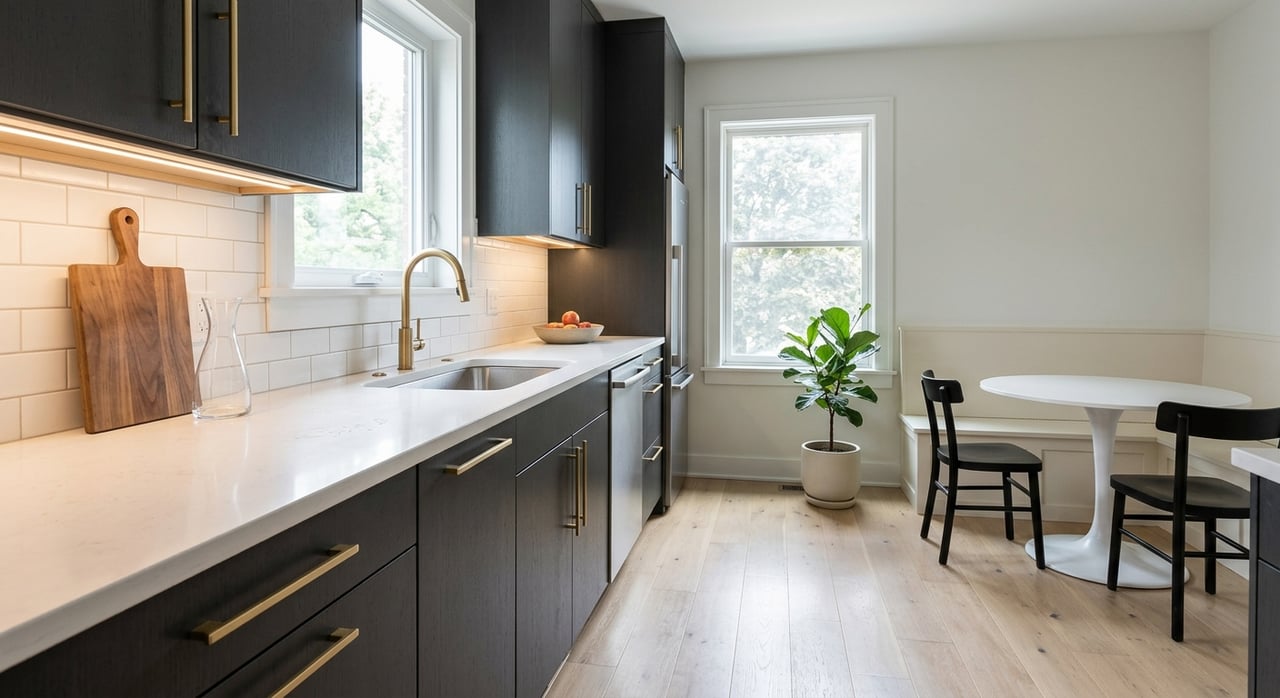
That is why a selective kitchen update often works best. Painting, replacing worn hardware, updating lighting, refreshing cabinet fronts, or improving the overall look and function may help the home show better without putting you into a long renovation timeline. If your kitchen has major functional problems, the math may change, but many sellers do not need a full gut job to compete.
Bathrooms matter because buyers notice age, cleanliness, and maintenance quickly. The same national report estimated bathroom renovation at 50% cost recovery, which means a remodel can help marketability even if it does not fully pay for itself.
If your bathroom is outdated but functional, a lighter refresh may be the better move. New fixtures, fresh paint, improved lighting, updated mirrors, and careful caulking or tile repair can often improve the impression without the cost and disruption of a full renovation.
Some projects are not exciting, but they can still be important. Roofing stood out in the remodeling research as a category with strong buyer and agent interest, and it was also one of the projects agents most often recommended sellers complete before listing.
If your roof is nearing the end of its life, replacing it may reduce buyer hesitation and help inspection conversations go more smoothly. A roof issue can feel like a major future expense to a buyer, so solving it upfront may have more practical value than putting the same money into a cosmetic upgrade.
Sometimes the right answer is not renovation at all. If your home needs expensive work, if the return on improvements feels uncertain, or if timing matters more than maximizing presentation, listing as-is may be the more efficient path.
In Maryland, selling as-is generally means using the disclaimer route rather than a full disclosure statement, but it does not erase all disclosure responsibilities. Under Maryland law, sellers must still disclose known latent defects even in an as-is sale, and the buyer takes the property as-is except as otherwise provided in the contract.
That distinction is important. As-is is not a shortcut around known problems. It is better understood as a pricing and risk strategy when you do not want to complete repairs or upgrades before listing.
Maryland’s disclosure framework covers many of the issues that matter most to buyers during a sale, including:
If you know about a hidden defect in one of these areas, selling as-is does not let you stay silent about it. That is why pricing, documentation, and preparation still matter even when you choose not to renovate.
In Montgomery County, permit requirements can make a big difference in your pre-listing plan. Many cosmetic projects do not require permits, including painting, floor coverings, cabinets, gutters and downspouts, roof covering only, siding, and replacing windows or doors without changing the opening size.
But the county indicates permits are likely required for additions, decks, electrical work, HVAC replacement, interior alterations, retaining walls, and other structural or system-level changes. Most permits also require inspection. The county also advises homeowners to check municipality and HOA requirements and to use qualified, licensed professionals.
A project may sound simple at first but become much more involved once permits, inspections, scheduling, and paperwork enter the picture. If you start major work too close to your listing date, you could create delays or extra documentation issues instead of improving your sale position.
That is one reason many Bethesda sellers are better served by permit-light updates rather than large renovations right before listing. Cosmetic improvements can often sharpen the home’s appeal without adding the same level of complexity.
If you are stuck between renovating and listing as-is, this four-step approach can help simplify the decision.
Start with the items buyers notice immediately or worry about most. Roof concerns, visible water damage, broken systems, damaged flooring, peeling paint, or worn-out finishes can shape the whole impression of the home.
If the home mainly needs a fresher look, focus on projects like painting, flooring, cabinet updates, lighting, and entry improvements. These tend to be easier to manage and often do more for marketability than a major remodel.
A full kitchen or bath renovation may be worthwhile if the space has serious functional issues. But if the project is mainly aesthetic, remember that national cost recovery estimates are often well below 100%.
If you choose not to renovate, your pricing strategy becomes even more important. Buyers in Bethesda may accept dated condition or needed work, but they usually expect the price to reflect it.
For many Bethesda homeowners, the strongest path is not all or nothing. It is a tiered strategy: address safety and visibility issues first, use cosmetic updates where they materially improve buyer perception, avoid major projects unless they solve a real problem, and price the home according to its actual condition.
That approach fits both the local market and the broader remodeling data. In a market where homes can still attract strong interest but many sales close below list price, thoughtful preparation usually beats automatic overspending.
If you are preparing to sell in Bethesda, the best next step is to look at your home through a buyer’s eyes and make decisions based on likely return, timing, and risk. When you want a clear, local strategy for what to update, what to leave alone, and how to position your home in today’s market, Myah C. Moxley can help you build a plan that feels smart, practical, and tailored to your goals.
Myah makes meeting customer needs and satisfaction a priority and characteristic of RE/MAX Plus. Your goals are her goals, and she will work tirelessly for you to ensure your dreams are realized. Whether you are in the market to buy or sell, give Myah a call today, and let her work for you!