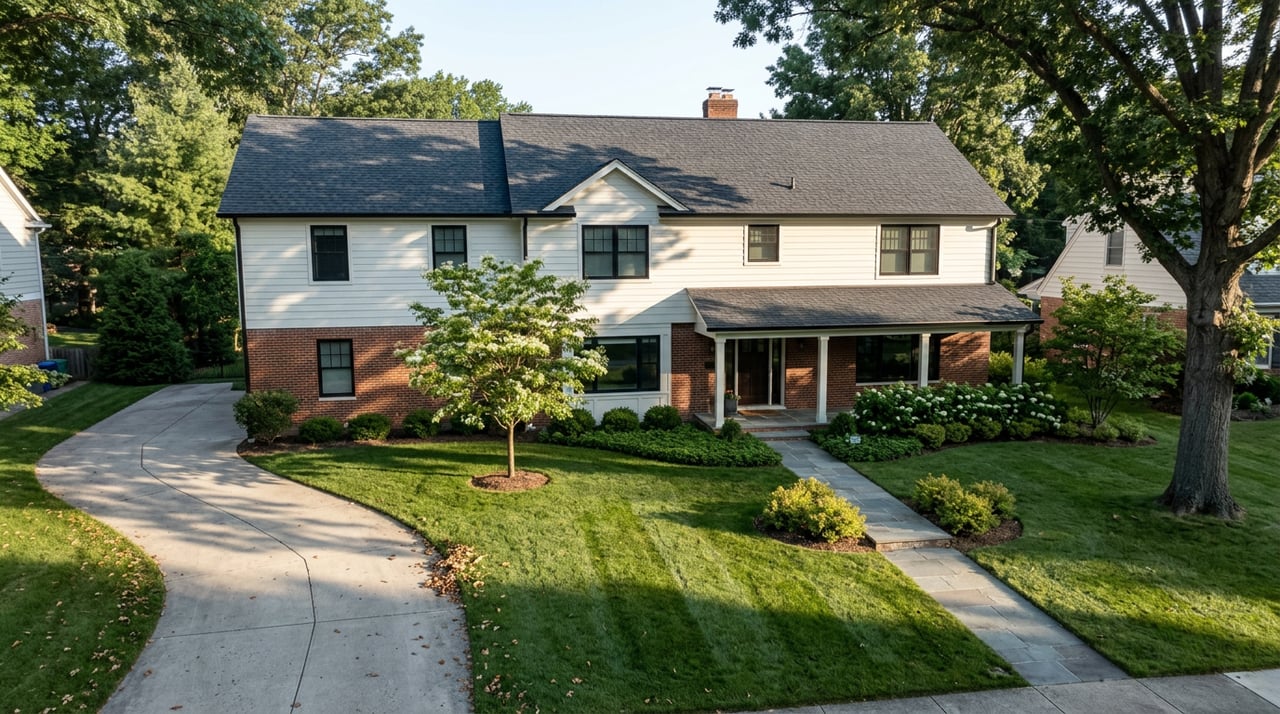
Montgomery County MD Housing Market 2026: Two Market Trends
If you've been watching Montgomery County home prices from a distance this year, the headline number probably looked reassuring. Modest growth, no drama, a market settling into something calmer after a few wild years. So why did a colonial two streets over go under contract in nine days with three offers, while a townhouse a block away sat through July, took a price cut, and is still sitting?
Both of those things happened. Both show up inside the same countywide statistic. The reason they read like a contradiction is that Montgomery County's 2026 numbers are quietly reporting on two different housing markets that happen to share a zip code.
If you're comparing neighborhoods, weighing a single-family home against a townhome, or trying to figure out how much negotiating room you actually have, the county median is the wrong number to anchor on. Here's the one that matters more.
Through the first half of 2026, Montgomery County closed sales were up about 5.75 percent compared to the same period the year before, while the median sold price rose a more modest 2.36 percent, according to Bright MLS data. On its own, that reads like a market cooling into balance: more activity, prices holding roughly steady.
That 2.36 percent is a blend, though. Break it apart by property type across the wider Washington D.C. metro, of which Montgomery County is the largest piece, and the picture changes. Detached single-family homes appreciated close to 3.5 percent year over year through mid-2026. Townhomes and condos, over that same stretch, gained just 0.2 percent. Functionally flat.
| Property type | YoY price change (D.C. metro, mid-2026) | What it looks like on the ground |
|---|---|---|
| Detached single-family | ~3.5% | Multiple offers on well-priced listings, faster contracts |
| Townhome or condo | ~0.2% | Longer time on market, more price reductions, softer competition |
That's not a rounding difference. It's the difference between a seller who lists with confidence and a seller who has to price defensively before day one.
Nobody publishes a memo explaining the mechanism, but the pattern lines up with something happening across the country. Owners of detached homes who locked in a mortgage rate years ago have less reason to sell, because moving means trading that rate for something closer to the 6.0 to 6.3 percent range forecasters expect for the rest of 2026. That keeps detached supply tight even while overall listing activity climbs.
Townhomes and condos don't carry that same pressure in the same way. They're more often the property type that first-time buyers stretch to afford and that downsizers or investors are more willing to release. More of that inventory reaches the market at any given time, so buyers shopping in that segment have more choices and less reason to bid a listing up.
That leaves a county where detached inventory is scarce and defended, and attached inventory is comparatively plentiful and price-sensitive, both folded into the same set of monthly headlines.
If you own a detached home in Montgomery County right now, you are likely sitting on real appreciation. If you own a townhome or condo, your value is probably close to where it stood a year ago. Not up, not down, just flat.
That distinction should shape how you read a listing before it shapes your offer.
The split doesn't land the same way in every submarket, because the mix of detached versus attached housing changes block to block.
Bethesda and Silver Spring keep drawing the county's deepest buyer pools, largely on the strength of Metro access and walkable downtown cores, and that demand touches both housing types there. Even attached product in those areas tends to move faster than the countywide average would suggest.
Potomac's upper end tells a different story. Above roughly $1.5 million, homes are taking 60 or more days to sell, and staging and pricing strategy matter more than they did two years ago, because that price tier has a smaller, more patient buyer pool regardless of property type.
Germantown and the upper-county corridor sit closer to the value end of the market, which cuts both ways. Buyers get more house for the dollar out there, but sellers face more competition from similar listings nearby, since the same value pitch that draws buyers in also means more homes fit the same description.
Rockville shows the split inside a single city. One measure put the median sale price there at $690,000 as of March 2026, up more than 20 percent year over year. Another measure of typical home value, taken that same season, showed a slight decline instead. Neither number is wrong. They're measuring different slices of the same market, the same way the county's detached and attached figures are.
The countywide sold-to-original-list-price ratio slipped about 0.8 percent year over year through the middle of 2026. That's a real shift, but not a swing into buyer territory. For comparison, that ratio topped 101 percent across the metro at the height of the 2021 seller's market. Where the county sits now is closer to a fair negotiation than a runaway advantage for either side.
Days on market has stretched too, from roughly 27 days a year ago to about 32 days over the three months ending May 2026, based on aggregated listing data. Readers who want to track that measure over time without relying on a single site can follow the Federal Reserve Bank of St. Louis's public days-on-market series for Montgomery County, updated monthly.
That number moves with the same split as everything else. A well-priced detached home in a strong, walkable pocket can still go under contract inside a week. A townhome priced at last year's number can sit well past a month before the seller adjusts.
Before treating any two Montgomery County listings as comparable, run them through the same short list.
Does 0.2 percent appreciation mean townhomes and condos are a weak investment in Montgomery County? Not necessarily. Flat growth over a single year isn't the same as declining value, and attached housing still benefits from the county's job base and school demand. It does mean sellers in that segment need sharper pricing, and buyers may find more room to negotiate than the countywide median suggests.
Is Montgomery County a buyer's market or a seller's market in 2026? Neither, cleanly. The data points to something closer to balance than the seller-dominated years of 2021 and 2022, but the honest answer changes by property type and submarket, which is exactly why the blended median isn't the number to lead with.
How do I know which side of the split a specific home falls on? Ask about recent comparable sales for that exact property type in that specific neighborhood, not the county figure. A detached home and a townhome three streets apart can be having completely different years.
A single county number can tell you the market moved. It can't tell you which market moved, or whether the home you're comparing sits on the strong side of that split or the soft one. That's the conversation worth having before you write an offer or set a list price.
Myah Moxley works Frederick County and the surrounding Maryland commuter markets, including Montgomery County, every day, watching this exact divergence show up property by property. Let's Connect and talk through what your specific submarket and property type are actually doing right now.
Myah makes meeting customer needs and satisfaction a priority and characteristic of RE/MAX Plus. Your goals are her goals, and she will work tirelessly for you to ensure your dreams are realized. Whether you are in the market to buy or sell, give Myah a call today, and let her work for you!